

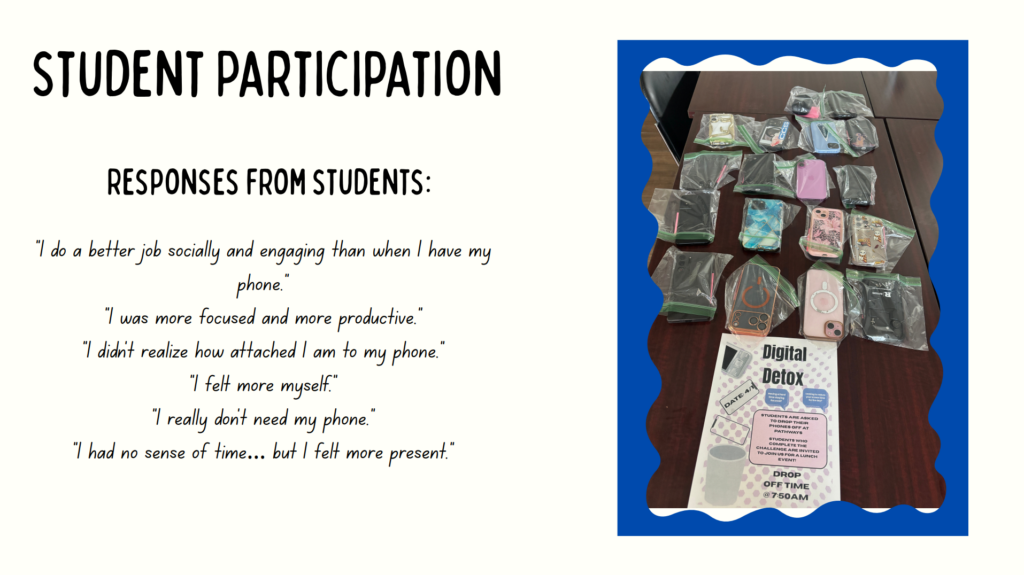
On Wednesday, April 1, high school students in the Pathways program at Wellspring Center for Prevention took part in a full-day Digital Detox Day.
From 8 a.m. to 2:30 p.m., participating students handed over their phones and spent the school day without them. The timing was intentional. Held just before spring break, the activity gave students a chance to reflect on screen use ahead of a period when phone time often increases.
What followed was a simple but meaningful experiment in focus, connection, and self-awareness.
What Was Digital Detox Day?
Digital Detox Day was a phone-free school-day experience for high school students.
Students voluntarily gave up access to their phones for the full day, creating an opportunity to see what changed when digital distractions were removed from the usual routine. Rather than framing the day as a punishment, the activity encouraged reflection and awareness.
It also gave students a chance to notice:
- How often they reach for their phones
- How phone use affects focus and productivity
- What changes when they spend more time interacting face-to-face
- How they feel emotionally without constant digital access
How Many Students Participated?
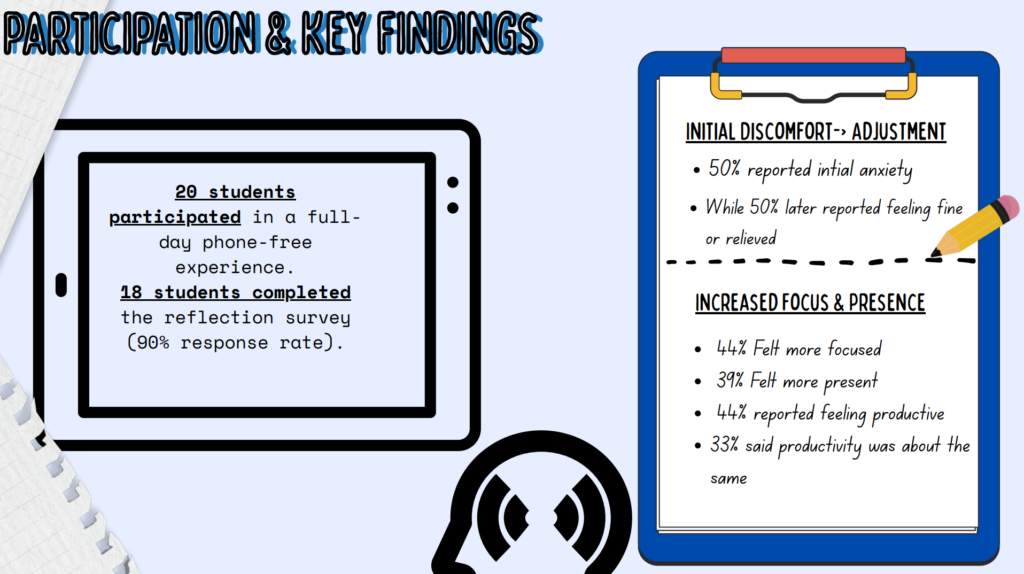
A total of 20 high school students took part in the full-day Digital Detox Day experience, and 18 students completed a survey afterward to reflect on how the day felt and what they noticed. While the activity was small in scale and limited to high school participants, it still generated useful feedback about how students experienced a structured break from their phones.
What Students Reported After a Full Day Without Phones
The student survey pointed to several encouraging outcomes after just one full school day without phones. The responses suggest that even a short break from constant digital access can influence how students feel, interact, and move through the school day. Several students reported improvements in focus and productivity, while others described feeling more present and more socially engaged without their phones nearby.
Among surveyed participants:
- 44% said they felt more focused.
- 44% said they felt more productive.
- 39% said they felt more present.
- 50% said they talked to people more.
- 83% said they would be open to taking breaks from their phones again.
Taken together, these findings suggest that structured, phone-free time may help some students pay closer attention, connect more with the people around them, and become more aware of how their devices shape daily habits.
Just as importantly, the strong openness to future phone breaks suggests that even students who may have felt hesitant at first were able to find value in the experience.
Was It Hard for Students to Be Without Their Phones?
For some students, yes.
The day was not effortless for everyone, and that is part of what made the experience meaningful. Students had mixed reactions at the start. Some felt fine, curious, or even relieved. Others felt anxious, bored, or annoyed.
Survey responses also showed that:
- 56% said they felt bored at times.
- 22% said they did not miss their phone much.
- 28% said they missed it a lot.
That range of responses matters. It shows that students do not all experience phone separation in the same way, and that their relationship with technology can vary widely.
How a Phone-Free Lunch Helped Students Connect
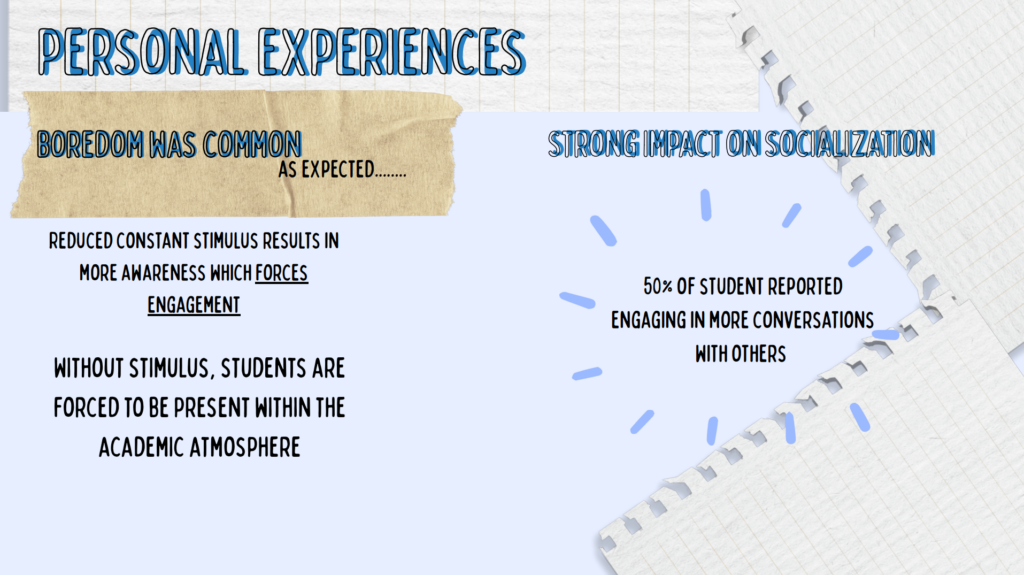
One of the most memorable parts of Digital Detox Day came during lunch, when participating students were invited to join a recreation period together. Instead of scrolling on their phones, students spent time playing games, listening to music, and interacting in a more relaxed, shared space.
Ediza Lahoz-Valentino, Director of School-Based Clinical Services, said the moment stood out not just because students were socializing, but because of who was connecting. Students who do not typically interact were laughing together, spending time together, and forming new connections in a way that felt organic.
She said the lunch period helped create a sense of community that may not have developed in the same way with phones in hand, and that it clearly highlighted one of the day’s biggest takeaways: when students unplug, they may have more room to connect with one another in meaningful ways.
How the Day Affected Student Mood
The survey suggests that mood remained stable or improved for most students.
Reported mood outcomes included:
- 22% said their mood was better.
- 44% said their mood stayed the same.
- 6% said their mood was worse.
This does not mean taking away phones automatically improves mental health. It does suggest that many students were able to adapt to the experience without a major negative emotional impact. Some even found benefits they did not expect.

What Schools and Families Can Learn From Digital Detox Day
Digital Detox Day was a small activity, but it offered a useful reminder: students may benefit from intentional opportunities to unplug.
The biggest takeaway is not that every student needs a dramatic reset or strict screen ban. Instead, the results point to the value of creating structured moments for students to pause, reflect, and connect in person.
For schools and families, that could mean:
- Setting aside phone-free times during the day.
- Encouraging more face-to-face interaction.
- Helping students reflect on how their phone habits affect focus and mood.
- Treating discomfort or boredom as part of the adjustment process, not automatic failure.
Why This Matters for Student Well-Being
Today’s students are growing up in an environment shaped by constant notifications, digital social pressure, and near-continuous access to screens.
That makes it even more important to create experiences that help them build self-awareness, self-regulation, attention, and real-world social connections.
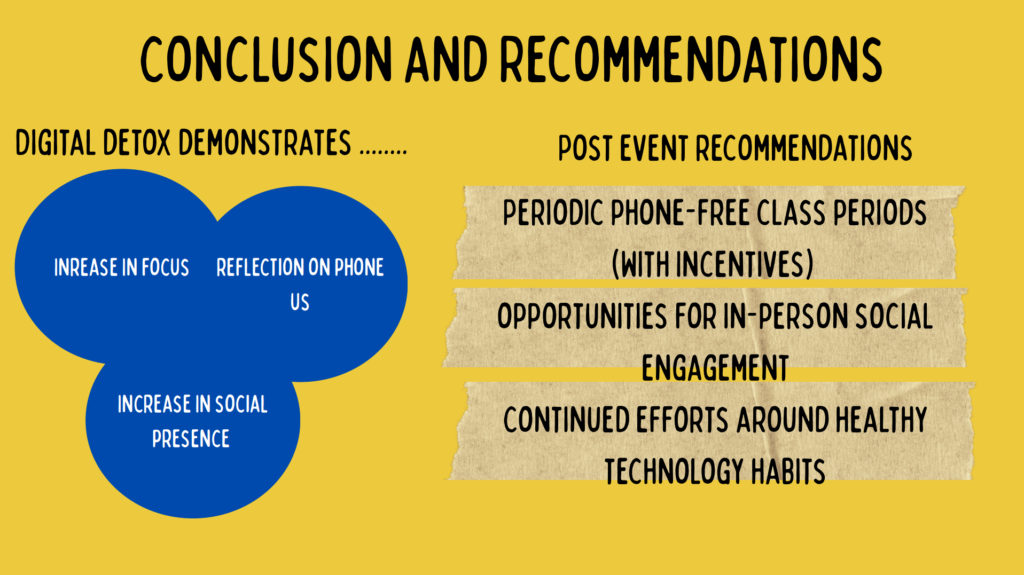
Digital Detox Day showed that even one school day without phones can become a meaningful learning experience, giving students the chance to reflect on their habits and experience the benefits of being more present with the people around them.
Final Takeaway
For one school day, students stepped away from their phones and into a different kind of experience.
Many reported better focus. Some felt more present. Others talked to people more than usual. Even when the day felt uncomfortable or boring at times, it still created space for reflection, connection, and insight.
That is what made Digital Detox Day matter. It was not about punishment or perfection. It was about helping students notice what changes when they unplug.